Zone 2 Cardio for Lifters | Body Matrix South Melbourne
Learn how to use Zone 2/soft cardio to boost fitness, recovery and fat loss without sacrificing muscle. Advice from 7x Mr Australia coach at Body Matrix.
FITNESSCARDIOWEIGHT LOSS
By Rohan “Chief” Reid — 7x Mr Australia, 40 years under the bar
5/25/20263 min read
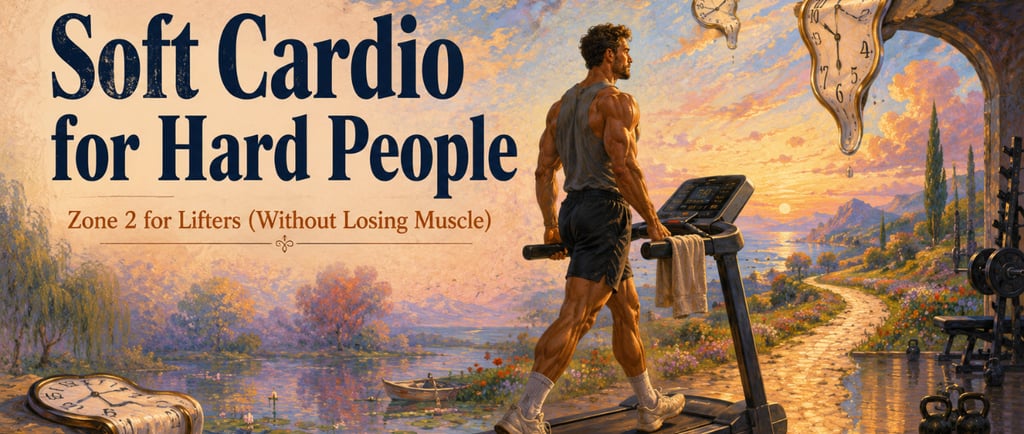
The internet is currently obsessed with Zone 2 cardio and “soft/cozy cardio.” It’s trending because it feels doable—less punishment, more consistency.
But it’s also controversial because people are claiming it’s the best way to train your heart, burn fat, and live forever—which is where the nonsense creeps in.
Here’s the truth from four decades of coaching bodies that actually have to perform in the real world:
Soft cardio is not magic. It’s not useless either.
It’s a tool. And when lifters use it properly, it makes training easier, recovery better, and results more consistent.
What is “soft cardio” or Zone 2?
Soft/cozy cardio is low-intensity movement that doesn’t cook your nervous system (walking, easy cycling, incline treadmill).
Zone 2 is typically described as steady aerobic work at a moderate, sustainable intensity (often approximated by the “talk test” if you don’t want to marry a heart-rate monitor).
Chief translation:
You should be able to breathe, talk, and keep going—without turning purple.
Why lifters should care (even if you hate cardio)
Because your “fitness” isn’t just your muscles. It’s your ability to recover and repeat good sessions.
Soft cardio helps:
Recovery capacity — you bounce back faster between hard sessions
Work capacity — weights sessions feel less like you’re suffocating
Consistency — it’s easier to do regularly than HIIT, which is why it works
And since the major health guidelines still emphasize getting enough weekly movement (moderate and/or vigorous) plus strength training, soft cardio is often the easiest way for busy people to hit those totals.
Is Zone 2 “the best” intensity?
Not universally.
A recent narrative review argues the evidence doesn’t support Zone 2 as the optimal intensity for certain claimed benefits, especially if time is limited.
Chief translation:
If you’ve got limited time, a smarter blend often beats worshipping one zone.
The Body Matrix rule: use a blend
For most lifters, the sweet spot is:
2–4 soft cardio sessions/week
+ 2–5 strength sessions/week
+ 0–2 harder cardio sessions if your goal and recovery allow it
Soft cardio is the base layer. Strength is the main course. Hard cardio is the spice—good in small doses, ruinous when you dump the whole jar in.
How to do soft cardio without losing muscle
Here’s where lifters get paranoid. Don’t be.
1) Keep it truly easy
If it turns into a sweaty death march, it stops being recovery-friendly.
Use the talk test:
Can speak in sentences = good
Can only gasp = too hard
2) Put it in the right place
Best options:
After weights (10–25 minutes)
On an easy day between heavy lower sessions
As a morning walk if stress is high
3) Don’t let it steal from leg day
If your legs are constantly sore and your lifts stall, reduce cardio volume or separate it from heavy lower days.
4) Fuel like an adult
If you slash food and pile cardio on top, you’re not doing “fat loss.”
You’re doing “burnout.”
What to start with (simple prescriptions)
Beginner/comeback phase
3x/week
20–30 minutes
Easy pace
Focus: consistency
Intermediate lifter (wants recomposition)
3–4x/week
25–40 minutes
Mix incline walk + bike
Focus: recovery + weekly calorie burn
Busy professional (time-poor)
2–3x/week
15–25 minutes after weights
Focus: adherence
Common mistakes (that make cardio “not work”)
Going too hard every time (turning soft cardio into fatigue)
Doing heaps of cardio while sleep is trash
Cutting food aggressively and wondering why training sucks
Treating Zone 2 like a religion instead of a tool
If you want this tailored, book a consult
If you’re asking:
“How much cardio should I do for fat loss without losing muscle?”
“Where do I put it in my week?”
“Why do I feel wrecked all the time?”
That’s exactly what we solve with:
PT / Consultation with Chief (program, structure, accountability)
Pam’s Prehab if pain or niggles are limiting consistency
Book here: [PT/CONSULT LINK]
Prehab here: [PREHAB LINK]
Address
122-126 Gladstone St, South Melbourne, Victoria, Australia
Cbpu7n
Contacts
+61438 988 266
enquiry@bodymatrix.com.au